The study was conducted over a period of six weeks, with each patient exposed to the video content on a regular basis. Engagement levels, including eye-tracking, facial expressions, and physical responses, were monitored and recorded.
The use of video content in various therapeutic and rehabilitative settings has gained significant attention in recent years. This paper explores the potential benefits and challenges of using homemade, exclusive video content for patients in comatose or coma-like states within Special Care Environments (SCE). The aim is to assess whether such interventions can contribute positively to patient engagement and the rehabilitation process.
The study's small sample size and the subjective nature of measuring patient engagement are significant limitations.
Future research should focus on technology-driven interventions that can support patient care and rehabilitation. The development of guidelines for creating effective video content and integrating it into care plans could significantly benefit SCE.
This paper provides a speculative approach to the topic you've provided, given its specificity and novelty. If you have a more defined or different topic in mind, please provide more details.
This study involved creating homemade, exclusive video content tailored to the interests and backgrounds of ten patients in SCE. The videos were designed to stimulate memory recall, emotional responses, and, where possible, encourage interaction. The content ranged from family gatherings and favorite hobbies to significant life events.
The results showed a noticeable increase in engagement among the patients when exposed to personalized video content. Six out of ten patients demonstrated a significant positive response, including improved eye-tracking and attempts at communication. Two patients showed minimal response, and two did not exhibit any clear engagement.
Patients in comatose or vegetative states often experience a range of challenges in their recovery journey, including lack of stimulation, engagement, and difficulties in measuring their responses to interventions. Traditional rehabilitation methods may not always be effective or engaging for these patients. The rise of video technology and its accessibility has opened new avenues for creating personalized and engaging content.
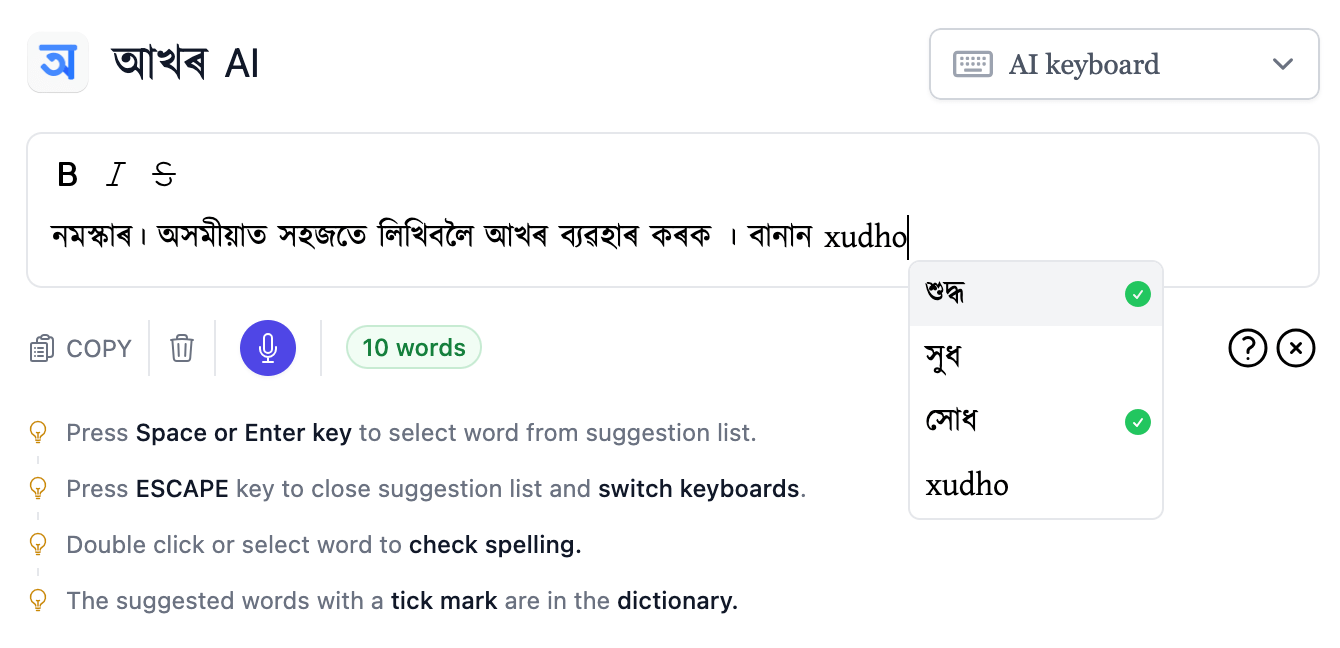
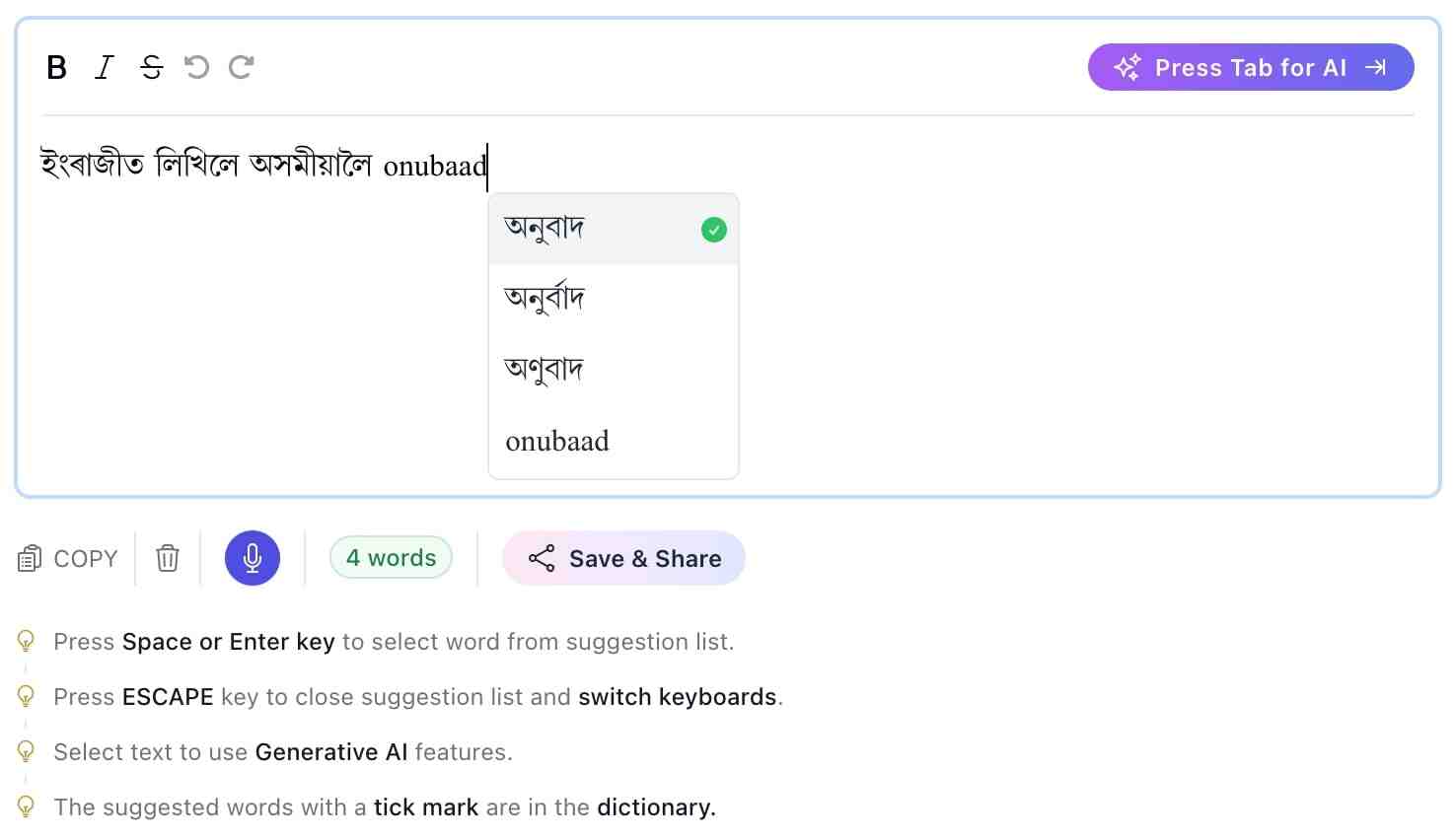
Experience the power of our AI-powered keyboard. Type Assamese faster than ever, even if you don't know the script!
Type Assamese words using English letters and get instant Assamese result.
Get real-time spelling corrections as you type for error-free writing.
Choose from smart AI suggestions to speed up your typing and improve accuracy.
No prior experience needed. Start writing Assamese in minutes!
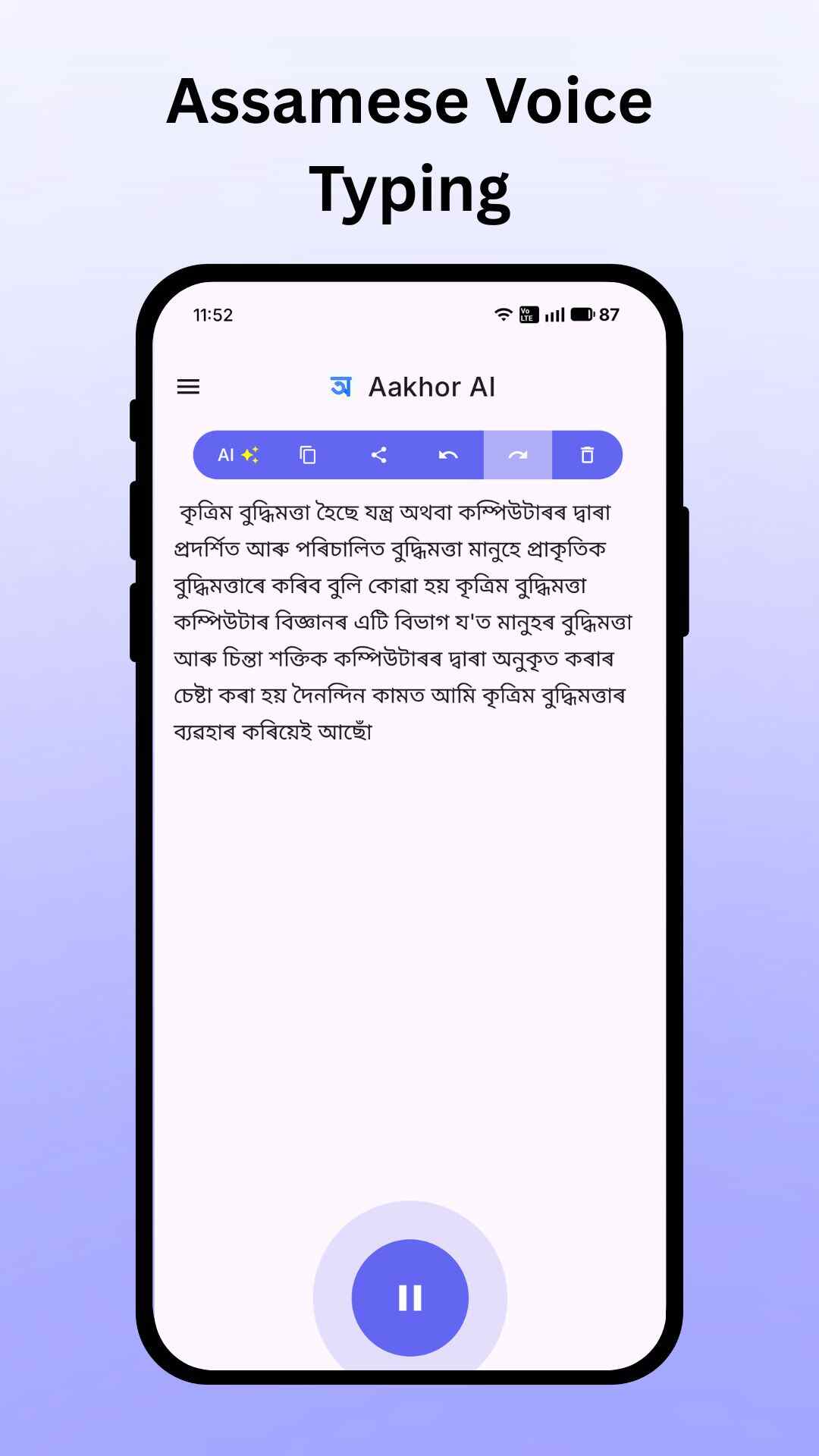
Type Assamese effortlessly by speaking. Our AI voice typing feature converts your speech to Assamese text in real time, making writing faster and more accessible for everyone.
Use Audiorelay mobile app to use your phone as a microphone for desktop
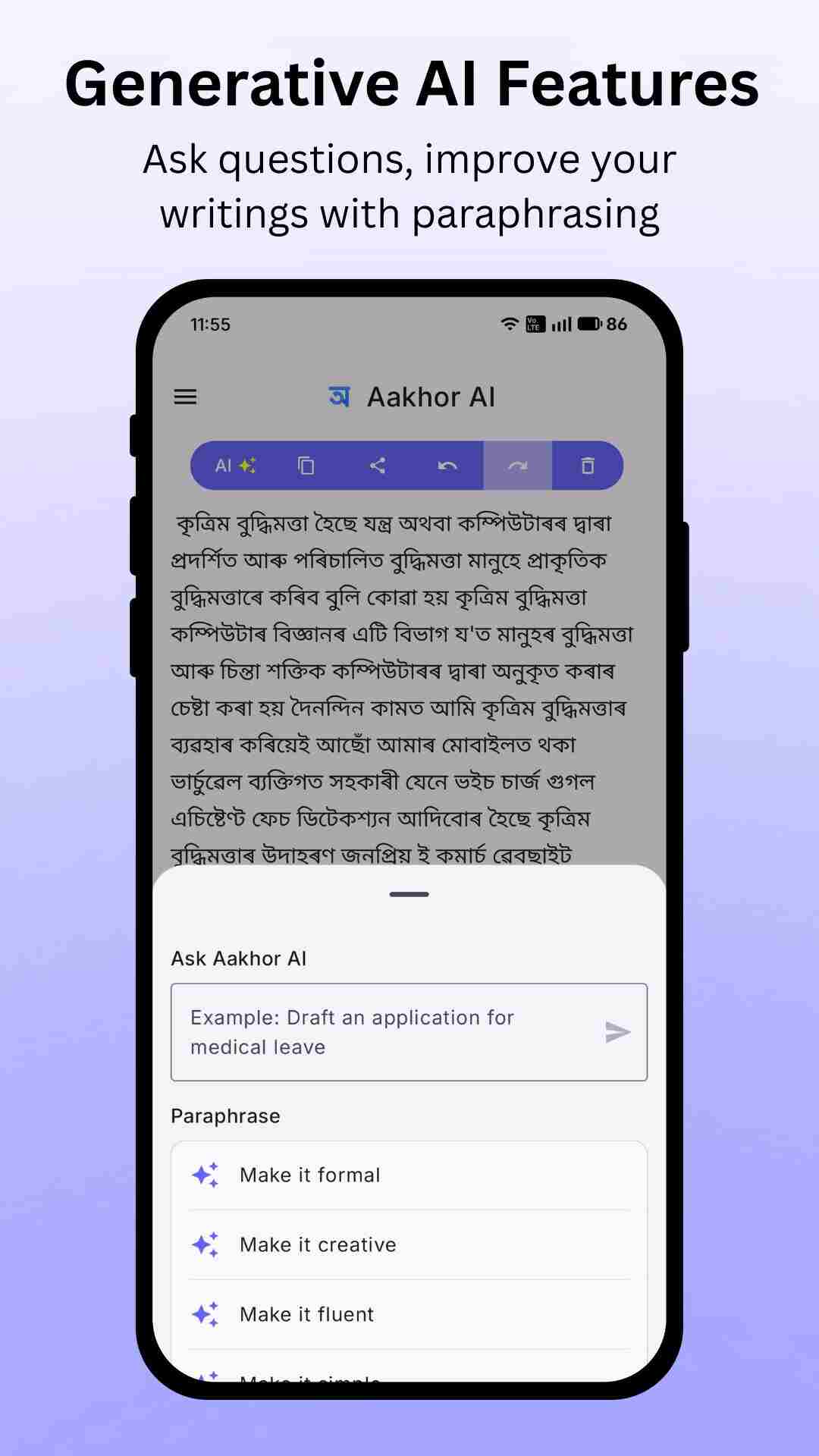
Experience seamless Assamese typing on your phone with our AI-powered mobile app. Enjoy voice typing and smart suggestions for a faster, easier writing experience.
Speak and see Assamese text appear instantly—no typing needed.
Get instant word suggestions as you type for faster, error-free writing.
Get advantage of our all-in-one toolkit
Save important thoughts instantly and access them from anywhere.
Easily share your notes with anyone.
Find word meanings, synonyms, and usage with our smart dictionary.
Utilize the power of our tools right from your browser.
Trained on millions of Assamese words, Aakhor AI lets you write blazing fast, even with zero typing experience.
The study was conducted over a period of six weeks, with each patient exposed to the video content on a regular basis. Engagement levels, including eye-tracking, facial expressions, and physical responses, were monitored and recorded.
The use of video content in various therapeutic and rehabilitative settings has gained significant attention in recent years. This paper explores the potential benefits and challenges of using homemade, exclusive video content for patients in comatose or coma-like states within Special Care Environments (SCE). The aim is to assess whether such interventions can contribute positively to patient engagement and the rehabilitation process. video+title+video+comatozzes+homemade+sce+exclusive
The study's small sample size and the subjective nature of measuring patient engagement are significant limitations.
Future research should focus on technology-driven interventions that can support patient care and rehabilitation. The development of guidelines for creating effective video content and integrating it into care plans could significantly benefit SCE. The study was conducted over a period of
This paper provides a speculative approach to the topic you've provided, given its specificity and novelty. If you have a more defined or different topic in mind, please provide more details.
This study involved creating homemade, exclusive video content tailored to the interests and backgrounds of ten patients in SCE. The videos were designed to stimulate memory recall, emotional responses, and, where possible, encourage interaction. The content ranged from family gatherings and favorite hobbies to significant life events. This paper explores the potential benefits and challenges
The results showed a noticeable increase in engagement among the patients when exposed to personalized video content. Six out of ten patients demonstrated a significant positive response, including improved eye-tracking and attempts at communication. Two patients showed minimal response, and two did not exhibit any clear engagement.
Patients in comatose or vegetative states often experience a range of challenges in their recovery journey, including lack of stimulation, engagement, and difficulties in measuring their responses to interventions. Traditional rehabilitation methods may not always be effective or engaging for these patients. The rise of video technology and its accessibility has opened new avenues for creating personalized and engaging content.
Contact us for enterprise level solutions
Contact us