Upd: P30downloadcom+password+upd
The simple architecture means anything is possible. The long-term tech helps avoid costly rewrites. That's why freelancers, agencies and large companies keep choosing it, since 2016.
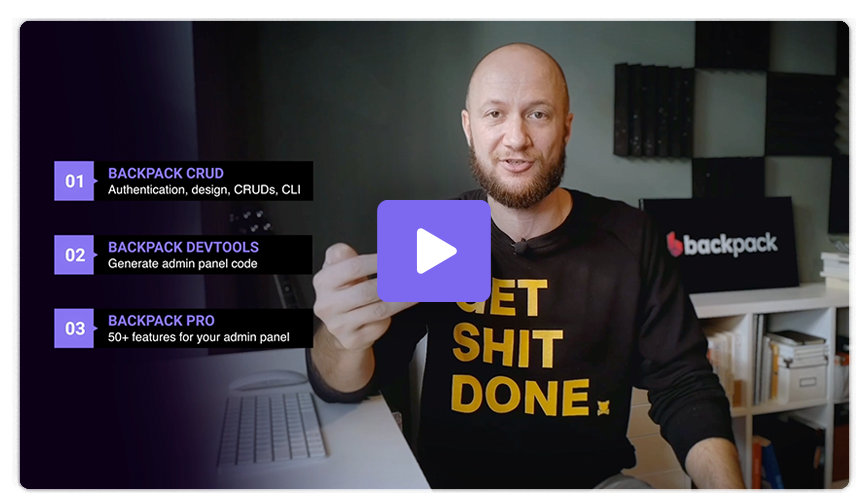
The simple architecture means anything is possible. The long-term tech helps avoid costly rewrites. That's why freelancers, agencies and large companies keep choosing it, since 2016.
Unique Downloads
Code Contributors
Years Operating
Similar to how you'd build it without Backpack. To create a management page (aka CRUD), you create a CrudController. In there, configure or overwrite whatever you want. Load our views, or create your own.
Laravel, Bootstrap & JavaScript - the only technologies you need to know, to customize anything in Backpack. For custom features you can use anything: jQuery, HTMX, Vue, React, WebPack, Mix, Less, Sass, NPM etc - your call.
1000+ well-designed UI components, thanks to Tabler & CoreUI. When you need to build a custom dashboard, page, component - you just copy-paste HTML blocks from its website. No designer needed - it will look great.






I should outline steps like verifying the site's legitimacy, checking for HTTPS, looking for user reviews or forum discussions about p30download.com, advising against sharing passwords on such sites, and suggesting alternative methods for obtaining updates (official websites, built-in update systems, etc.). Also, mentioning the dangers of downloading from untrusted sources—like malware, phishing, or data theft.
I should also include red flags: sites that demand passwords for downloads, especially from non-official sources, and the importance of not reusing passwords. Maybe suggest using a password manager if they need to handle multiple passwords for different legitimate sites. Also, mention how to check if a site is safe—like using Google Safe Browsing, Norton Safe Web, or other similar tools.
In summary, the main points are: verify the legitimacy of the site, avoid entering personal passwords, use secure methods to update software, and be cautious of potential malware. The answer should be structured to first address each component (site, password, update), then explain the risks, and finally provide actionable steps to stay safe. p30downloadcom+password+upd
Another angle: the "upd" could be part of a file name, like "software_upd.exe." The user should verify the file's authenticity if they do proceed. Check the file size against known good versions, use antivirus software to scan downloaded files before opening them, and check for digital signatures if applicable.
Additionally, the "+" symbols in the topic might be URL encoding or just separators. The complete feature could relate to a full version of some software available on that site. But given that it's combined with password and update, it's more likely a scam scenario. The user might need to be cautious, even if the site appears to offer something useful, until proven safe. I should outline steps like verifying the site's
Next, the password. When a site asks for a password, it could be for accessing a protected file or resource. But in many cases, fake sites use password entry to capture sensitive information. The user might be trying to access a file that requires a password, and the site is prompting them for it. It's crucial to warn about the risk of entering passwords on unverified websites. Also, the password might be part of a download process, but if the site isn't legitimate, any password entered could be stolen.
Now, the "upd" part. That could mean "update," "upgrade," "patch," or even a part of a filename. If this is related to software, the user might be trying to download an update. But again, if the site isn't trustworthy, the file might be malicious. The user should be cautious about downloading updates from unknown sources. Legitimate updates are usually distributed through official site updates, app stores, or via trusted software notification systems. Maybe suggest using a password manager if they
Putting this together, the user might be dealing with a situation where they're being directed to a site (p30downloadcom) to download a file, possibly an update or patch ("upd"), and the site is prompting for a password. The challenge is to guide them on how to safely handle this or explain the risks involved.
No matter how you prefer to learn, we have it. Check out our 59-minute video course, our 20-minute text course and even a crash course.
Browse main features See live demo Go to docs